Buy stillberatung.eu ?
We are moving the project
stillberatung.eu .
Are you interested in purchasing the domain
stillberatung.eu ?
domain@kv-gmbh.de · 0541-91531010
Buy stillberatung.eu ?
Could Neanderthals speak?
There is ongoing debate among scientists about whether Neanderthals had the ability to speak. Some researchers believe that Neanderthals had the physical capability for speech based on the structure of their vocal tract, while others argue that there is not enough evidence to definitively prove they had a complex language like modern humans. Recent studies suggest that Neanderthals may have had the capacity for some form of vocal communication, but the extent and complexity of their language abilities remain uncertain. **
Should Neanderthals be gendered?
No, Neanderthals should not be gendered as there is limited evidence to support the idea that they had distinct gender roles or identities similar to modern humans. Assigning gender to Neanderthals based on limited archaeological evidence could perpetuate stereotypes and assumptions about gender roles in prehistoric societies. It is more accurate and respectful to refer to Neanderthals based on their biological sex rather than imposing modern concepts of gender onto them. **
Similar search terms for Neanderthals
Top-Angebote
Products related to Neanderthals:
-
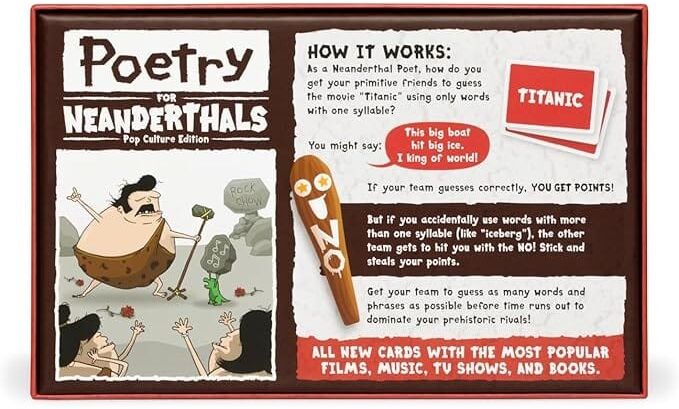
Exploding Kittens Poetry For Neanderthals - Compact Word Game for Family and Friends Ages 8+Bring the word game of Poetry For Neanderthals to your game nights in a compact format. Players take turns giving clues to help their teammates guess words, but there's a twist: clues must be explained using simple language. If a player uses a more complicated word, the opposing team can call them out. This results in a lively test of communication, vocabulary, and creative thinking, with plenty of laughs for family and friends. To play, form teams and prepare for the round. Give clues using straightforward words and help your teammates guess the target words before time runs out. Score points for successful guesses and win the game with the highest total. This portable edition is suitable for taking to gatherings, holidays, and game nights. Its compact format makes it easy to store alongside other travel games while retaining the core wordplay challenge of the original game.9,79 £*Shipping: 3,95 £Secure redirect to the provider
-
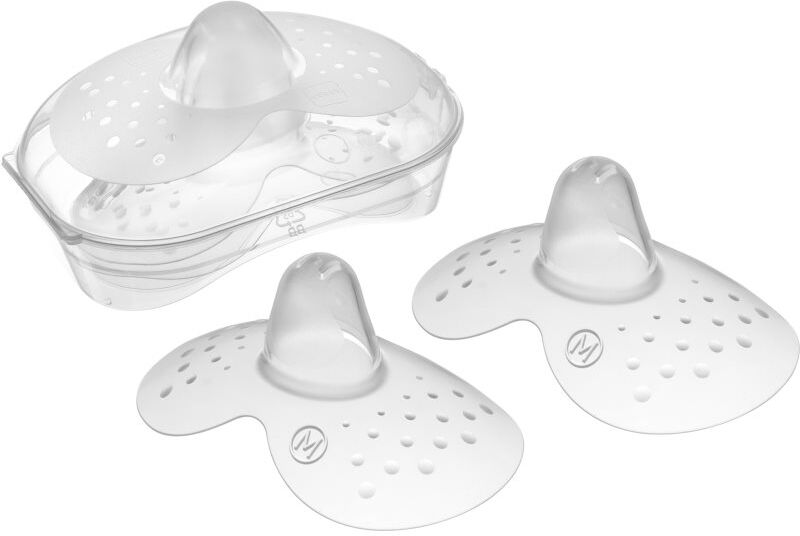
MAM Breastfeeding nipple shields for nursing size M 20 mm 2 pcMAM Breastfeeding, 2 pc, Nipple Shields for Breastfeeding for Women, MAM Breastfeeding nipple shields will help you solve many problems that might come with feeding your baby. Their specially designed shape and material will turn this lovely moment between a mother and a child into a time of relaxation. Characteristics: special shape of nipple shield lets the baby nuzzle up against the breast during nursing for a natural, comfortable feeling during feeding time protects painful and chapped nipples perfectly adheres to the breast made of soft silicone speeds up regeneration5,52 £*Shipping: 3,99 £Secure redirect to the provider
-
Bayer Ginecomplex Lactation 60 CapsulesNutrition and Supplements Vitamins and minerals Bayer Ginecomplex Lactation 60 Capsules Ginecomplex Lactation is a complete and balanced combination of omega-3 fatty acids, trace elements, vitamins, and minerals that helps meet the increased nutritional needs during breastfeeding. Ginecomplex Breastfeeding contains DHA (docosahexaenoic acid), an omega-3 fatty acid that contributes to maintaining normal brain and vision function, as well as essential trace elements: zinc contributes to cell division and the normal function of the immune system; iron contributes to the normal formation of red blood cells and hemoglobin and the normal transport of oxygen in the body; and iodine, which plays a role in normal cognitive function and the normal function of the nervous system. Other minerals such as copper and manganese are also present in Ginecomplex Breastfeeding. Ginecomplex lactation also contains vitamins: folic acid contributes to the growth of maternal tissues during pregnancy and to the process of cell division; vitamin A contributes to the maintenance of normal vision and supports the normal function of the immune system; vitamins B1, B2, B3, B6, B8 and B12 contribute to normal energy-yielding metabolism and the normal function of the nervous system; vitamin E contributes to the protection of cells from oxidative damage; vitamin C plays a role in normal collagen formation for the normal function of blood vessels, the normal function of the nervous system and the protection of cells from oxidative damage; and vitamin D, which contributes to the normal absorption and utilization of calcium and phosphorus, the maintenance of normal blood calcium levels, the maintenance of normal bones and the process of cell division. Instructions for Use: It is recommended to take two capsules daily during breastfeeding. Do not exceed this dose. Food supplements should not be used as a substitute for a varied and balanced diet and a healthy lifestyle.17,64 £*Shipping: 3,99 £Secure redirect to the provider


-
Are there still Neanderthals?
No, there are no longer any living Neanderthals. Neanderthals were an ancient human species that lived in Europe and parts of Asia until about 40,000 years ago. They are believed to have gone extinct, possibly due to competition with modern humans or environmental changes. However, some people of non-African descent carry a small amount of Neanderthal DNA in their genomes, as a result of interbreeding between Neanderthals and early modern humans. **
-
Are Neanderthals our ancestors?
Neanderthals are not direct ancestors of modern humans, but they are our close relatives. Both Neanderthals and modern humans share a common ancestor that lived around 600,000 years ago. Neanderthals and modern humans coexisted for a period of time, and there is evidence of interbreeding between the two groups. Today, most people of non-African descent have a small percentage of Neanderthal DNA in their genome. **
-
How did the Neanderthals live?
Neanderthals were a species of hominids that lived in Europe and parts of Asia around 400,000 to 40,000 years ago. They were skilled hunters and gatherers, relying on a diet of meat from hunting large animals like mammoths and bison, as well as plants and berries. They lived in caves or simple shelters made of wood and animal hides. Neanderthals were also known to have used tools and fire, showing a level of sophistication in their lifestyle. **
-
Where did the Neanderthals live?
Neanderthals lived in Europe and parts of western Asia, primarily during the Pleistocene epoch. **

What did Neanderthals look like?
Neanderthals were a species of ancient humans who lived in Europe and parts of Asia. They were similar in height to modern humans, but had a more robust build with shorter limbs. They had a large, broad nose, prominent brow ridges, and a sloping forehead. Their bodies were adapted to cold climates, with stocky builds and wide pelvises. Neanderthals also had a larger brain size than modern humans. **
Are there Neanderthals in Islam?
No, Neanderthals are an extinct species of hominids that lived in Europe and parts of Asia. Islam is a religion that originated in the 7th century in the Arabian Peninsula and does not mention Neanderthals in its teachings. The concept of Neanderthals is a scientific one related to evolutionary biology, while Islam focuses on spiritual beliefs and practices. **
Top-Angebote
Products related to Neanderthals:
-
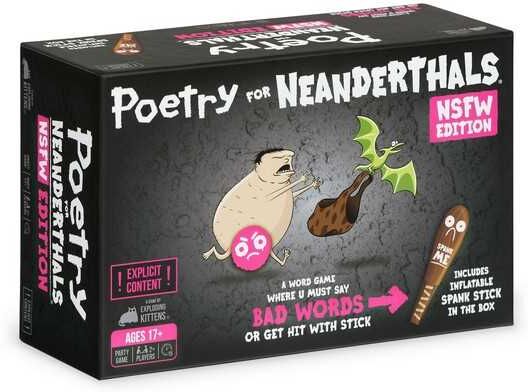
Exploding Kittens Adult Party Game - Poetry for Neanderthals - New EditionGet ready for a unique party game with Poetry for Neanderthals. Players take turns giving clues to help their teammates guess words and phrases, but with a twist: clues must use only single-syllable words. This game combines fast-paced guessing with deliberately challenging wordplay. If a player uses a word with more than one syllable, the opposing team can use the inflatable Spank Stick as part of the game's penalty mechanic. Suitable for social gatherings, this edition contains adult-themed content and is intended for adult players. It's a boxed tabletop game for group play, perfect for a fun night in with friends.17,23 £*Shipping: 3,95 £Secure redirect to the provider
-
Exploding Kittens Poetry For Neanderthals - Compact Word Game for Family and Friends Ages 8+Bring the word game of Poetry For Neanderthals to your game nights in a compact format. Players take turns giving clues to help their teammates guess words, but there's a twist: clues must be explained using simple language. If a player uses a more complicated word, the opposing team can call them out. This results in a lively test of communication, vocabulary, and creative thinking, with plenty of laughs for family and friends. To play, form teams and prepare for the round. Give clues using straightforward words and help your teammates guess the target words before time runs out. Score points for successful guesses and win the game with the highest total. This portable edition is suitable for taking to gatherings, holidays, and game nights. Its compact format makes it easy to store alongside other travel games while retaining the core wordplay challenge of the original game.9,79 £*Shipping: 3,95 £Secure redirect to the provider
-
MAM Breastfeeding nipple shields for nursing size M 20 mm 2 pcMAM Breastfeeding, 2 pc, Nipple Shields for Breastfeeding for Women, MAM Breastfeeding nipple shields will help you solve many problems that might come with feeding your baby. Their specially designed shape and material will turn this lovely moment between a mother and a child into a time of relaxation. Characteristics: special shape of nipple shield lets the baby nuzzle up against the breast during nursing for a natural, comfortable feeling during feeding time protects painful and chapped nipples perfectly adheres to the breast made of soft silicone speeds up regeneration5,52 £*Shipping: 3,99 £Secure redirect to the provider
-
Could Neanderthals speak?
There is ongoing debate among scientists about whether Neanderthals had the ability to speak. Some researchers believe that Neanderthals had the physical capability for speech based on the structure of their vocal tract, while others argue that there is not enough evidence to definitively prove they had a complex language like modern humans. Recent studies suggest that Neanderthals may have had the capacity for some form of vocal communication, but the extent and complexity of their language abilities remain uncertain. **
-
Should Neanderthals be gendered?
No, Neanderthals should not be gendered as there is limited evidence to support the idea that they had distinct gender roles or identities similar to modern humans. Assigning gender to Neanderthals based on limited archaeological evidence could perpetuate stereotypes and assumptions about gender roles in prehistoric societies. It is more accurate and respectful to refer to Neanderthals based on their biological sex rather than imposing modern concepts of gender onto them. **
-
Are there still Neanderthals?
No, there are no longer any living Neanderthals. Neanderthals were an ancient human species that lived in Europe and parts of Asia until about 40,000 years ago. They are believed to have gone extinct, possibly due to competition with modern humans or environmental changes. However, some people of non-African descent carry a small amount of Neanderthal DNA in their genomes, as a result of interbreeding between Neanderthals and early modern humans. **
-
Are Neanderthals our ancestors?
Neanderthals are not direct ancestors of modern humans, but they are our close relatives. Both Neanderthals and modern humans share a common ancestor that lived around 600,000 years ago. Neanderthals and modern humans coexisted for a period of time, and there is evidence of interbreeding between the two groups. Today, most people of non-African descent have a small percentage of Neanderthal DNA in their genome. **
Similar search terms for Neanderthals
-
Bayer Ginecomplex Lactation 60 CapsulesNutrition and Supplements Vitamins and minerals Bayer Ginecomplex Lactation 60 Capsules Ginecomplex Lactation is a complete and balanced combination of omega-3 fatty acids, trace elements, vitamins, and minerals that helps meet the increased nutritional needs during breastfeeding. Ginecomplex Breastfeeding contains DHA (docosahexaenoic acid), an omega-3 fatty acid that contributes to maintaining normal brain and vision function, as well as essential trace elements: zinc contributes to cell division and the normal function of the immune system; iron contributes to the normal formation of red blood cells and hemoglobin and the normal transport of oxygen in the body; and iodine, which plays a role in normal cognitive function and the normal function of the nervous system. Other minerals such as copper and manganese are also present in Ginecomplex Breastfeeding. Ginecomplex lactation also contains vitamins: folic acid contributes to the growth of maternal tissues during pregnancy and to the process of cell division; vitamin A contributes to the maintenance of normal vision and supports the normal function of the immune system; vitamins B1, B2, B3, B6, B8 and B12 contribute to normal energy-yielding metabolism and the normal function of the nervous system; vitamin E contributes to the protection of cells from oxidative damage; vitamin C plays a role in normal collagen formation for the normal function of blood vessels, the normal function of the nervous system and the protection of cells from oxidative damage; and vitamin D, which contributes to the normal absorption and utilization of calcium and phosphorus, the maintenance of normal blood calcium levels, the maintenance of normal bones and the process of cell division. Instructions for Use: It is recommended to take two capsules daily during breastfeeding. Do not exceed this dose. Food supplements should not be used as a substitute for a varied and balanced diet and a healthy lifestyle.17,64 £*Shipping: 3,99 £Secure redirect to the provider
-
Hi-Line Gift Mother & Baby KoalaAn awesome piece of sculptured art build with durable polyresin. This Mother and baby Koala statue can be a perfect addition to your home and garden decor. A true example of incredible craftsmanship that captured this emotion in the finest manner.155,71 $*Shipping: 0,00 $Secure redirect to the provider
-
How did the Neanderthals live?
Neanderthals were a species of hominids that lived in Europe and parts of Asia around 400,000 to 40,000 years ago. They were skilled hunters and gatherers, relying on a diet of meat from hunting large animals like mammoths and bison, as well as plants and berries. They lived in caves or simple shelters made of wood and animal hides. Neanderthals were also known to have used tools and fire, showing a level of sophistication in their lifestyle. **
-
Where did the Neanderthals live?
Neanderthals lived in Europe and parts of western Asia, primarily during the Pleistocene epoch. **
-
What did Neanderthals look like?
Neanderthals were a species of ancient humans who lived in Europe and parts of Asia. They were similar in height to modern humans, but had a more robust build with shorter limbs. They had a large, broad nose, prominent brow ridges, and a sloping forehead. Their bodies were adapted to cold climates, with stocky builds and wide pelvises. Neanderthals also had a larger brain size than modern humans. **
-
Are there Neanderthals in Islam?
No, Neanderthals are an extinct species of hominids that lived in Europe and parts of Asia. Islam is a religion that originated in the 7th century in the Arabian Peninsula and does not mention Neanderthals in its teachings. The concept of Neanderthals is a scientific one related to evolutionary biology, while Islam focuses on spiritual beliefs and practices. **
* All prices are inclusive of VAT and, if applicable, plus shipping costs. The offer information is based on the details provided by the respective shop and is updated through automated processes. Real-time updates do not occur, so deviations can occur in individual cases. ** Note: Parts of this content were created by AI.